A Great Depression By 2025? - The Man Who Called The 2008 Recession Sounds The Alarm | Peter Schiff

Showing posts with label Federal Reserve. Show all posts
Showing posts with label Federal Reserve. Show all posts
Understanding the Risk: Why Hundreds of U.S. Banks Are Vulnerable
In recent times, there has been growing concern over the financial health of numerous small and regional banks across the United States. This article delves into the factors driving this vulnerability and the potential implications for these crucial institutions in our banking ecosystem.
Commercial Real Estate Exposure and Interest Rate Risks
Why U.S. Cities Are Going Broke
Understanding the Financial Crisis: U.S. Cities, Debt, and Interest Rates
How 0% Interest Rates Has Caused The Next High Yield Bubble (Video)

The phenomenon of low or 0% interest rates potentially leading to a high yield bubble is an interesting topic that touches on various aspects of financial markets and economic behavior. Here’s a breakdown of how this can happen:
-
Lower Cost of Borrowing: When interest rates are near zero, borrowing costs are significantly reduced. This makes it cheaper for companies and investors to take on debt. As a result, businesses may issue more bonds to finance expansion or other projects, and investors may seek higher returns by investing in these bonds.
-
Search for Yield: With traditional savings accounts and government bonds offering very low returns, investors often look for higher yields in riskier assets. This search for yield can drive up prices in riskier bond markets, such as high-yield (junk) bonds, as investors are willing to accept lower credit quality for higher returns.
-
Increased Demand for High-Yield Bonds: The increase in demand for higher yields can lead to an inflow of capital into high-yield bonds. This demand pushes prices up and yields down, making high-yield bonds look even more attractive. However, this also means that these bonds may become overpriced relative to their risk.
-
Risk-Taking Behavior: With the cost of borrowing so low, there is often a tendency for both institutional and retail investors to take on more risk than they would otherwise. This can lead to the issuance of lower-quality bonds and an increase in speculative investments, as investors chase higher returns.
-
Market Distortions: Prolonged periods of low interest rates can distort market signals. Companies that may not have been able to issue bonds at higher rates might now issue debt at low rates, potentially leading to an oversupply of bonds with lower credit quality. This can mask underlying financial weaknesses and create an environment ripe for a bubble.
-
Potential for a Bubble Burst: When the economic conditions change or interest rates eventually rise, the prices of these high-yield bonds can drop sharply. Investors who bought these bonds at inflated prices may face significant losses, leading to a correction or crash in the high-yield bond market. This scenario can be exacerbated if many investors attempt to sell their bonds simultaneously, leading to a liquidity crisis.
-
Feedback Loops: The interplay between low interest rates, increased borrowing, and the search for yield can create feedback loops that amplify the bubble. As asset prices rise, confidence grows, leading to more borrowing and investment in high-yield assets, further inflating the bubble.
Understanding these dynamics is crucial for investors and policymakers to anticipate and mitigate the risks associated with a high-yield bubble. Proper risk management, diversification, and careful monitoring of market conditions are essential strategies to navigate such environments.
Are We In A Recession? - I asked Chat GPT Some Related Questions
What is considered a recession?
A recession is generally defined as a significant decline in economic activity across multiple sectors of an economy, typically lasting for a sustained period of time. It is characterized by a contraction in the gross domestic product (GDP), which is the measure of the total value of goods and services produced within a country.
The Entire US Economy is Built on a House of Heavily Manipulated Cards

Was The 2010 Election Job Creation Data Manipulated Also?
Biggest Failures of United States Regulatory Agencies

Regulatory agencies are not effective at their jobs, but we still need them. How do we make regulatory agencies more transparent and hold them accountable for their actions?
What Was the Brexit Vote? An Overview of the 2016 Referendum

In June 2016, the United Kingdom experienced a pivotal moment in its political history with the Brexit vote, a referendum that asked British citizens to decide whether the UK should remain in or leave the European Union (EU). This decision, with far-reaching implications, marked the beginning of a complex and often contentious process that reshaped the UK's relationship with the EU and the world.
The Context
The Brexit vote emerged from longstanding debates within the UK about the country’s role in the EU. Critics of EU membership argued that it compromised the UK's sovereignty, led to excessive regulations, and allowed unrestricted immigration from other EU countries. Supporters of remaining in the EU highlighted the economic benefits, including access to the single market and the advantages of political and economic collaboration with other European nations.
The Referendum
The referendum was called by then-Prime Minister David Cameron, who was under pressure from within his Conservative Party to address the EU membership issue. The campaign was marked by intense debate and sharp divisions, both within the UK and among its political leaders. The Leave and Remain campaigns each presented compelling arguments to the public, with Leave advocates focusing on issues like immigration control and national sovereignty, while Remain supporters emphasized economic stability and security.
The Outcome
On June 23, 2016, the British public voted on the question: “Should the United Kingdom remain a member of the European Union or leave the European Union?” The results were close, with 51.9% of voters choosing to leave the EU and 48.1% voting to remain. The Leave campaign secured 17.4 million votes, while the Remain campaign garnered 16.1 million votes.
Immediate Reactions
The result was a shock to many, leading to significant political and economic repercussions. Prime Minister David Cameron announced his resignation, citing the need for new leadership to guide the country through the exit process. The decision to leave the EU triggered debates over the future of the UK, including the fate of Northern Ireland, Scotland’s calls for another independence referendum, and the overall economic impact.
The Negotiation Process
Following the vote, the UK entered a period of intense negotiations with the EU to determine the terms of its departure. These talks covered a wide range of issues, including trade relations, citizen rights, and the financial settlement. The process was marked by numerous challenges, disagreements, and delays, leading to an eventual agreement on the terms of Brexit.
The Final Exit
The UK officially left the EU on January 31, 2020, entering an 11-month transition period to finalize arrangements for its future relationship with the EU. This transition period ended on December 31, 2020, marking the completion of the UK’s departure from the EU. The new relationship was defined by a trade agreement that sought to balance the UK’s desire for independence with the need for economic cooperation with the EU.
Conclusion
The Brexit vote of 2016 was a landmark moment in UK history, reflecting deep-seated divisions and sparking a new era of political and economic realignment. While the immediate aftermath was marked by uncertainty and upheaval, the UK’s departure from the EU has set the stage for ongoing discussions about the country’s role on the global stage and its future within a changing European landscape. As the UK continues to navigate the post-Brexit era, the implications of that historic vote will undoubtedly continue to shape its trajectory for years to come.
How Crony Capitalism Corrupts the Free Markets

In a true free market, competition thrives on the principles of merit and fairness, allowing the best products and services to rise to the top. However, when crony capitalism takes root, these principles are undermined, leading to a distortion of market dynamics and a significant erosion of economic efficiency and equity.
Defining Crony Capitalism
Crony capitalism refers to an economic system in which business success is heavily influenced by close relationships between business leaders and government officials. Rather than competing on the basis of quality, innovation, and efficiency, businesses gain advantages through preferential treatment, subsidies, regulatory favors, and other forms of government intervention that disadvantage their competitors. This practice undermines the foundation of a free market, where success is determined by market forces and consumer choice.
The Erosion of Fair Competition
One of the most profound impacts of crony capitalism is the erosion of fair competition. In a free market, companies must innovate and improve their offerings to attract customers and sustain growth. However, crony capitalism allows certain businesses to bypass this crucial aspect of market dynamics. By securing favorable regulations, tax breaks, and government contracts, crony firms can undercut their competitors or maintain market dominance without having to compete on equal footing.
This distortion not only stifles innovation but also discourages new entrants from entering the market. New businesses, lacking the same connections and influence, find it challenging to compete with established firms that enjoy government favoritism. As a result, the market becomes less dynamic and less responsive to consumer needs, ultimately leading to stagnation and reduced economic growth.
Resource Misallocation
Crony capitalism often leads to inefficient allocation of resources. When businesses receive government support or protection, they may invest in projects or products that are not necessarily aligned with consumer demand or societal needs. This misallocation can lead to overproduction in certain sectors while others suffer from a lack of investment and development. For example, subsidies for fossil fuel industries can crowd out investment in renewable energy technologies, even as the demand for sustainable solutions grows.
The impact of crony capitalism is not limited to economic inefficiency; it also exacerbates income inequality and social unrest. When a small group of businesses and their allies control significant economic resources through their political connections, the wealth gap widens. The general public, who are often excluded from these networks, may see little benefit from economic growth and may even experience a decline in their standard of living.
This growing disparity can lead to disillusionment and dissatisfaction with the economic system, fueling social and political instability. The perception that the game is rigged against ordinary people can erode trust in institutions and democratic processes, further destabilizing the economy and society.
Addressing the Challenge
Addressing the challenges posed by crony capitalism requires a multifaceted approach. Strengthening regulations to prevent conflicts of interest, promoting transparency in government contracts, and ensuring that competition laws are robust and effectively enforced are crucial steps. Additionally, fostering an inclusive economic environment that supports entrepreneurship and innovation can help counterbalance the advantages enjoyed by crony firms.
Ultimately, restoring the integrity of free markets in the face of crony capitalism is essential for promoting sustainable economic growth, enhancing social equity, and ensuring that the benefits of prosperity are widely shared. By reasserting the principles of fairness and competition, societies can build markets that truly serve the interests of all, not just the privileged few.
Be Fearful When Others Are Greedy

The Put Call Ratio vs the S&P 500 Is Unhealthy Once Again
Everyone Buying Calls & No One Is Buying Puts
Healthy Markets Correct To Clean Out The Crap & Pretenders
This Market is Phony Just Like The Fed Who Does Not See A Bubble
This is Not a Map But An Important Chart to Understand
Why The Fed's 0% Interest Rate Policy Hurts The Economy & Savers

What Is The Best Bitcoin Wallet or Exchange Service?

Where is the Best Places to Buy & Trade Bit Coins?
What Wallets and Exchanges Are Certified?
How Are Merchant and Bitcoin Owners Vetted?
Bitcoin is the World's first decentralized digital monetary system and "bitcoins" are the currency units used. A decentralized system is essentially a P2P or pier to pier system versus a centrally managed system like PayPal. The system has existed since January 3rd, 2009 and is used in every Country in the World. Bitcoins are created and controlled by advanced mathematics and cryptography, instead of by governments or banks (no government, bank, or corporation owns or controls Bitcoin). Bitcoins as a currency unit are created over time at a diminishing rate, and there will never be more than 21 million of them in existence (though they are highly divisible).
Bitcoin is different from any other payment system because:
- It is decentralized (no group has monopoly control over it)
- It is not tied to US dollars or other government fiat currencies
- It is impossible to suffer chargebacks or frozen accounts
- It is (relatively) anonymous
- Fees are optional (you may pay to make your transactions process slightly faster)
- Merchants can accept payments easily with hardly any fees.
US Governments officials and regulators will obviously be interested in stopping / regulating this for the following reasons:
- Cutting Off Terrorism Funding
- Leakage of Tax Revenue
- Money Laundering
- Tax Evasion
- Exchange of Illegal Goods and Services
Federal Reserve Whistleblower Says "Insiders Know Quantitative Easing Doesn't Work"
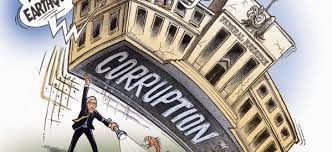
In a startling revelation that has sent ripples through the financial community, a whistleblower from the Federal Reserve has come forward with allegations that senior officials within the institution are well aware that Quantitative Easing (QE) does not effectively stimulate economic growth as intended. The whistleblower, who has chosen to remain anonymous for fear of retaliation, claims that the longstanding policy of purchasing long-term securities to inject liquidity into the financial system has been largely ineffective in achieving its goals.
Quantitative Easing, introduced by the Federal Reserve in response to the 2008 financial crisis, was designed to lower interest rates and increase the money supply to stimulate economic activity. By buying vast quantities of government and mortgage-backed securities, the Fed aimed to drive down long-term interest rates, thereby encouraging borrowing and investing. The policy was expanded and maintained through several rounds of QE, especially following the economic downturn and during the COVID-19 pandemic, as the Fed sought to support the economy in the face of unprecedented challenges.
However, according to the whistleblower, the intended effects of QE have been largely superficial and, in some cases, counterproductive. The source claims that insiders have long known that the policy has failed to generate the expected inflationary pressures or significantly boost economic growth. Instead, it has primarily served to inflate asset prices, contributing to growing wealth inequality and distorting financial markets.
The whistleblower pointed to several key issues with QE. One major concern is that the policy has primarily benefited large financial institutions and wealthy individuals, who have seen their asset holdings appreciate substantially. Meanwhile, middle- and lower-income households have not experienced the same benefits, leading to a widening wealth gap. Critics argue that QE has contributed to asset bubbles in markets such as real estate and stocks, potentially setting the stage for future financial instability.
Furthermore, the whistleblower suggested that the Federal Reserve’s focus on monetary policy has overshadowed the need for more comprehensive fiscal measures to address economic challenges. The lack of coordinated fiscal policy, the whistleblower argues, has left the economy vulnerable to shocks and has hindered efforts to achieve sustainable, broad-based growth.
The revelations have sparked a heated debate among economists, policymakers, and the public. Some experts argue that the whistleblower's claims highlight the need for a reevaluation of the Federal Reserve’s approach to economic policy, advocating for more targeted interventions that address the root causes of economic inequality and promote inclusive growth. Others defend the Fed’s actions, contending that QE was a necessary and effective tool given the extraordinary circumstances of the past decade.
As the debate continues, the question remains whether the Federal Reserve will take the whistleblower’s concerns into account and consider a shift in its policy framework. For now, the spotlight is on the Fed and its leadership to clarify their stance on the efficacy of Quantitative Easing and to address the growing calls for a more balanced and equitable approach to economic policy.
Has the Fed Lost Control of Interest Rates & the Bond Market?
Is the 10 Year about To Breakout of This Long Term Monthly Range into the 5-6% Range?
Is the 30 Year about to Breakout of this Long Term Monthly Range to 8%?
 TLT is the 30 Year Bond vs S&P 500

Historical Chart Fed Interest Rates vs SPX 1971 to 2013

This chart alone should tell you how much impact the Federal Reserve has on the overall economy. The Fed can obviously influence bankers but they have a little trickle-down effect on the overall economy. Housing market bubbles yes but business growth and jobs no.

Is the economy 27x stronger than it was in 1971? Or is this a Ponzi scheme spending and debt policy that have simply propped up markets artificially. Is the value created over the last 40 years at risk to collapse?


The labor participation rate is collapsing.
Is a Currency War about to Cause the Next U.S. Stock Market Crash?
Is the money printing debt ponzi scheme about to come to a crashing end?
New Phony Fed Stimulus Financial Paradigm = Deflation Not Inflation

Fed Stimulus = Long-Term Deflation Not Inflation
The Fed has created another bubble that will likely pop but this time all the hedge funds are all long the market and not short. Is the business environment REALLY getting any better with all the Fed Stimulus, QE1, QE2, or QE3? Not really if you ask me and it has created a phony sense of reality with the over-inflated equity markets. Historically, investors would value buying stocks based on that company making money. Today, investors are making stock purchasing decisions based on liquidity, yield, and price action. The Fed wants investors to chase equities and bonds higher so we feel wealthy and spend more. But their intentions to create inflation could have the opposite effect on those who actually create the jobs and invest.
S&P Low 666 (2009) x 2 = High 1332 (2012)
 |
| S&P Low in 2009 of 666 x 2 = 1332 High in 2012 |
The stock market has become a rigged game in the last few years. It is being propped up by the Federal Reserve and Ben Bernanke's team by printing unlimited dollars to buy futures and bonds in the open market. Bond prices are artificially low in order to encourage people to spend and not save. However, the smart people running big corporations are sitting on hoards of cash earning 0%. Its because the market has been propped up in a phony way and there is no organic growth. Executives are expecting a stock market crash of grand proportions that will wipe out all of the Government businesses that have been propped up. Cash will be king in the future and there will be no safe havens. It's just a matter of time before the huge "House of Cards" bonds and stocks all fall at the same tim,e wiping out the wealth that has been artificially created.
Yes, the United States can print endless amounts of money in order to create inflation and promote growth. The experts think we can grow our way out of the debt crisis and reduce the current 100% debt-to-GDP ratio that has doubled under the Obama administration. However, the austerity in Europe is nothing compared to what we might see in the U.S. if Mitt Romney gets elected and the Federal Reserve money printing press is halted. It will be painful in the short term but the long term gain for my kids and grandchildren will be tremendous. The U.S. Government must feel the pain of overspending and let the free markets take over their bloated and egregious spending habits. Don't forget Mitt Romney has been a private equity / restructuring guy in the private sector and will have the biggest turnaround project of all time on his hands once he pulls the Fed plug.
Mitt Romney knows that a healthy economy will grow through organic investment and capitalism at the local level. In healthy economies, the Venture Capital & Private Equity industries thrive and so do quality IPO's that foster the cycle of wealth that has built the foundation of the United States. However, the recent financial crisis has led the Government to step in and act as the market "Big Brother" to prevent big investors from losing money. The VC industry and private equity industries are shrinking drastically because large LP's (limited partners) have no incentive to invest with below 0% annual returns due to overbearing Government regulations. We all know in healthy free markets there are winners and losers. However, now the losers are being prevented from losing and this is not capitalism. Bailouts have been preventing huge bankruptcies and progress towards creating new and more efficient businesses.
Thousands of banks should have gone out of business and so should have many of the auto companies like General Motors. Restructuring and bankruptcies are all part of the free market cycle and we have yet to go through it on a large scale downturn. The 2009 downturn was prevented by the Government by double its debt load in the trillions and now the next recession could be even worse and deeper.
In summary the only thing that is going to help the economy in the long run build a foundation of growth that is sustainable is if the Government simply gets out of the way. We investors are all "Big Boys" and taking loses is part of the game. Trying to impose regulations on the financial services industry to prevent loses only restricts the free market capital flows and prevents investors from doing anything. We need investors to be excited about investing and now restricted. These two bills / laws need to be repealed by the next President and then you will see healthy organic investment growth come back to the private sector.
1) Repeal Sarbanes Oxley
2) Repeal Dodd Frank Bill
Should US Government Spending Crash Like the Stock Market?

- Should US Government spending crash like the stock market?
- Will industries that rely on Government spending be crushed?
- Has the Federal Reserve lost all credibility with the markets?
- The VC industry shrunk by 80% in the last decade so why not the Government?
- Rising interest rates might actually be good for the "real economy"?
- Are currency wars are going to get even more intense?
- Is the US the new emerging market carrying highest investment risk?
- Where & when will the next tech industry boom (ie jobs) come from?
- Is the Obama administration trying to kill capitalism vs government spending?
- When will kicking the Government debt can down the road STOP?
Who is More Influential on the Economy Steve Jobs or Ben Benanke?

1) History has shown that the economy only grows when there is an ecosystem of technology that creates jobs & Apple has fueled the growth of tech which has created millions of jobs Worldwide.
2) Ben's 0% interest rates have had no effect on whether millions of consumers Worldwide have made emotional Apple purchasing decisions. Two thirds of the US economy is based on consumption and Apple is driving it.
3) Ben Bernanke is an academic that relies on historical data to make reactive decisions when economic history rarely repeats itself.
4) Steve Jobs relies on his vision to shape the future of the technology industry and millions of people are affected based on these decisions.
5) The stock market always needs a leading growth stock story like AAPL in order for investors to get excited and put money to work in the market. The Nasdaq 100 index QQQQ is 20% based on Apple and thus 99 other stocks are directly affected by how AAPL trades.
6) 0% interest rates over the last few years have done nothing but create a bond market and real estate bubble which does nothing for capitalism and growth.
7) Steve Jobs has created wealth for millions of entrepreneurs who have started companies to feed off the Apple ecosystem.
8) Ben Bernanke has put billions of dollars in the hands of bankers and bond fund managers to prop up the stock market and create a false sense.
9) Foreign countries who invest in US Treasury Bills, like China, are not happy that the US is intensionally keeping interest rates low thus devaluing the dollar. The Dollar cannot be devalued forever in order to finance the future and thus a long term bubble is forming if it were to rise suddenly.
10) Apple's stock (AAPL) has the largest market cap in the World at $319 Billion and if it were to lose value quickly it would take down a lot of hedge funds, pension funds who have jumped on the bandwagon of wealth creation and could be destruction if we are not careful.
Get well Steve! We need you and Google to keep all entrepreneurs and investors excited about the future. Technology NOT energy should be the basis of the World economy in order to leave a better place for our kids.
Popular Articles (All Time)
-
 Across the world, citizens are taking mapping into their own hands. With smartphones, GPS , and open-source tools , people are documentin...
 -
In the evolving landscape of digital media, publishers are constantly seeking innovative ways to monetize their content. One such tool that...
-
 By Emily Cohn (Age 10) Are paper straws better for our environment than plastic straws? What do paper straws do in the world?
 -
Credit card fraud has been a persistent issue for decades, affecting millions of people worldwide. Despite significant advancements in tech...
-
Geographic Information System (GIS) visualization techniques are essential for analyzing and presenting spatial data in meaningful ways. Her...
-
A Great Depression By 2025? - The Man Who Called The 2008 Recession Sounds The Alarm | Peter Schiff
-
Steve Blank shares an insider's perspective on how data and analytics are disrupting the art of venture capital investing . Is the era...
-
As we progress through 2024, the global financial landscape presents numerous opportunities for savvy investors, particularly in the realm...


