Showing posts with label Government. Show all posts

FCC Rules on Slander for Broadcasters vs Social Media Free Speech

The way speech is regulated in the United States depends greatly on the medium. Broadcasters such as television and radio stations fall under the oversight of the Federal Communications Commission (FCC), which enforces rules against slander, obscenity, and indecency on public airwaves. In contrast, social media platforms like Facebook, X (formerly Twitter), YouTube, and TikTok operate in a far less regulated environment, primarily governed by platform policies and Section 230 of the Communications Decency Act. This article explores the FCC requirements for broadcasters when it comes to slander, explains the difference between slander and libel, and highlights why social media content is treated differently.

What the FCC Requires From Broadcasters

Broadcasters operate on the public airwaves, which are considered a limited public resource. Because of this, they must meet licensing requirements and adhere to content regulations. While the FCC does not directly regulate slander cases, it does set standards for fairness and truth in programming. Broadcasters can face consequences if they knowingly air false statements that damage a person’s reputation. The FCC requires licensees to operate in the “public interest, convenience, and necessity.” This includes preventing defamatory speech on programs, particularly during live broadcasts. If slander occurs, a broadcaster may be exposed to civil liability and, in extreme cases, face FCC scrutiny if such actions suggest a lack of control over programming. Unlike private conversation, broadcasting slander is magnified by its reach, which is why the FCC emphasizes responsibility.

Slander vs. Libel in Broadcasting

Slander refers to false spoken statements that harm a person’s reputation, while libel refers to false written or published statements. In broadcasting, the spoken word over radio or television is often considered slander, though in some legal contexts it may be treated as libel since it is recorded and disseminated. Broadcasters must be particularly careful in live settings such as call-in shows, interviews, and unscripted segments. For example, if a guest makes a knowingly false statement about an individual, the station could face a lawsuit if it fails to issue corrections or exercise editorial oversight. This is why many broadcasters use time-delay mechanisms to filter out inappropriate or defamatory content.

The Fairness Doctrine and Its Legacy

Historically, the FCC also enforced the Fairness Doctrine, which required broadcasters to present controversial issues in a balanced way. Although the Fairness Doctrine was abolished in 1987, its legacy still influences broadcasting ethics. The underlying idea was that because broadcasters use public airwaves, they owe viewers truthful and balanced coverage. While slander laws are enforced through courts rather than the FCC, the expectation remains that broadcast licensees must avoid reckless disregard for the truth.

Social Media and Section 230

Unlike broadcasters, social media platforms are not licensed by the FCC. Instead, they operate under a legal framework established by Section 230 of the Communications Decency Act of 1996. Section 230 grants platforms immunity from liability for content posted by users. This means if a user publishes defamatory statements on X, Facebook, or YouTube, the platform itself cannot generally be sued for slander or libel. The user who created the content may face legal consequences, but the platform is shielded. This legal distinction creates a massive difference in accountability. Broadcasters are responsible for nearly everything they air, while social media companies are treated as “neutral hosts,” even though in practice they use algorithms to amplify certain content.

The Problem of Scale and Enforcement

Broadcasting is finite: only a set number of radio and TV frequencies exist, and each licensee is monitored by the FCC. By contrast, social media operates at an infinite scale. Millions of users publish content simultaneously across platforms, making real-time oversight impossible. The FCC has no jurisdiction over social media platforms, which means content moderation is left to company policies, community guidelines, and in some cases, international law. For example, platforms often remove slanderous posts only when flagged by users, whereas broadcasters are expected to prevent defamatory content before it reaches the airwaves.

Case Examples in Broadcasting

There have been several high-profile cases where broadcasters faced lawsuits for slander or defamation. For instance, if a local news anchor falsely accuses a business owner of fraud without evidence, the station could be sued for damages. The FCC might also review whether the station demonstrated irresponsibility in meeting its license obligations. In political broadcasting, candidates have additional protections. Broadcasters cannot censor legally qualified candidate ads, but they also cannot slander opponents directly without exposing themselves to liability. This creates a narrow but important balance between free speech and reputation rights.

Case Examples in Social Media

On social media, slander cases rarely involve the platform itself. Instead, lawsuits are directed at individuals who posted defamatory statements. However, enforcing judgments can be difficult, especially when anonymous accounts are involved. Social media companies may cooperate with law enforcement in cases of criminal threats, but they rarely intervene in civil slander disputes. This has led to criticism that platforms spread misinformation and defamation with few consequences. Unlike broadcasters, they cannot lose an FCC license, because no such regulatory oversight exists.

Calls for Reform

As misinformation spreads online, some lawmakers and regulators have called for reforms to Section 230. Proposals include narrowing immunity so platforms can be held accountable if they algorithmically promote slanderous or harmful content. Critics argue that the current system creates a double standard: broadcasters face strict responsibility for slander, while platforms that reach billions of users face little risk. Proponents of Section 230 argue that removing immunity would crush free speech online and burden platforms with endless lawsuits.

Key Differences Between Broadcasters and Social Media

To summarize:

  • Broadcasters are licensed by the FCC and must operate in the public interest. They are legally responsible for defamatory statements aired on their stations and can lose licenses if they repeatedly fail in oversight.

  • Social media platforms are shielded by Section 230. They are not legally responsible for user-generated slander, though they may remove content under their policies. Liability generally falls on the user.

  • Enforcement is proactive for broadcasters but reactive for social media, where slanderous content often spreads before being removed.

Conclusion

The FCC’s role in regulating broadcasters ensures that slanderous or defamatory speech is minimized on public airwaves. Broadcasters must exercise editorial judgment and maintain control over their programming or face serious consequences. Social media platforms, however, operate under an entirely different framework that largely absolves them of responsibility for slanderous user content. This difference reflects both the historical nature of broadcasting as a scarce public resource and the modern challenge of regulating billions of online voices. Whether Congress revisits Section 230 or strengthens slander protections in the digital era remains a subject of ongoing debate.

Why Google Maps Doesn't Show You Unsafe Areas

Google Maps has become the default navigation tool for millions of drivers, cyclists, and pedestrians around the world. While it excels at finding the fastest route, avoiding tolls, and rerouting around traffic jams, one thing it does not do is warn you about unsafe neighborhoods or crime hotspots. This leaves many users asking: why doesn’t Google Maps include safety alerts? 

U.S. Diplomacy Needs Greater Transparency

In a world of shifting alliances, rising great-power competition, and volatile public opinion, the conduct of U.S. diplomacy must evolve. One critical reform is greater transparency. Though diplomacy necessarily involves discreet negotiations and confidential channels, the United States must strike a better balance: it should resist opaque decision-making and instead embrace openness wherever possible. A more transparent diplomacy would strengthen democratic accountability, enhance credibility abroad, and reduce domestic suspicion and polarization.

Why Transparency Matters in Diplomacy

  1. Democratic legitimacy and accountability
    Foreign policy is one of the few arenas where the executive wields broad authority. Without sufficient oversight, diplomatic decisions risk drift from public priorities. Transparency helps citizens, Congress, and civil society understand, evaluate, and challenge diplomatic choices. As the Brookings Institution has argued, greater transparency “is needed — both between the branches themselves, and vis-à-vis the American public.” Brookings

    Moreover, open access to treaties, executive agreements, negotiation texts, and diplomatic reporting enables more informed scrutiny. Under updated rules, the State Department now publishes treaty and executive agreement texts and their legal authorities (though often separated across sites). Just Security Without transparency, critics or opponents often denounce deals as covert power grabs or hidden agendas.

  2. Credibility and soft power
    In diplomacy, perception and trust matter as much as power. When U.S. actions are seen as secretive or contradictory, allies and adversaries alike question intentions. Transparency signals confidence: if the U.S. believes its policies are justifiable, it should not shy from giving publics a clearer view. In a multipolar world, information is a currency of influence; opaque diplomacy leaves space for adversaries to sow disinformation or challenge U.S. narratives. 

    Furthermore, public diplomacy — the effort to communicate U.S. values and policies to international audiences — works better when external audiences see coherence and consistency between public messaging and behind-the-scenes actions. If formal diplomacy is cloaked in secrecy, public messaging can be dismissed as propaganda.

  3. Preventing corruption and misuse of power
    With greater opacity comes greater risk of abuses: shadowy side-deals, favoritism, misuse of funds, or secret waivers of standards. Transparency strengthens deterrence against misconduct. The State Department’s own anti-corruption and transparency programs underscore how openness is essential to sustainable diplomacy. State Department

    Transparency also builds resilience: when mistakes or malfeasance are exposed, corrective mechanisms can take hold before damage becomes systemic.

Obstacles & Tradeoffs

Of course, transparency has limits: diplomacy often requires confidential negotiation, private bargaining chips, and internal deliberation. Revealing every cable, proposal, or strategy would stifle candor and damage leverage. That said, several reforms can push the frontier of what is reasonable to disclose.

  • Deliberative space vs. performance space
    Diplomats must be able to speak frankly, hedge proposals, and explore options internally. That deliberation must be protected. But once policies are adopted, the rationale, key tradeoffs, and negotiated outcomes should be subject to scrutiny. Publicness should not infect every stage, but the boundary line should shift toward greater openness.

  • Strategic secrecy
    Some issues (e.g. intelligence, military operations, looming sanctions, third-party bargaining positions) must remain confidential until a deal is formalized or irreversible. But the default should tilt toward disclosure unless strong, specific harm can be shown.

  • Information asymmetries and timing
    Timing matters. Premature disclosure can undercut bargaining. But too much delay breeds cynicism. The U.S. should commit to publishing documents after a defined lag (e.g. months or years, not decades), except where genuine continued secrecy is essential.

  • Narrative tension & national message control
    Transparent diplomacy forces diplomats to restate national narratives and make public commitments even before deals are finalized — which can harden positions and make flexibility difficult. (This “public diplomacy tension” is observed in scholarship on “post-reality diplomacy.”) Universiteit Leiden But in 2025, democratic publics expect accountability; the higher cost of narrative rigidity is more than offset by legitimacy gains.

Concrete Reforms to Make U.S. Diplomacy More Transparent

Here are actionable reforms the U.S. should adopt:

  1. Publish negotiation texts and drafts with annotations
    Much diplomacy today still occurs behind closed doors. The U.S. should commit, when feasible, to publishing negotiation texts (with redactions only for genuinely sensitive portions), plus margin notes explaining rationale, alternatives considered, and tradeoffs. This fosters public understanding and reveals the path from policy objective to agreement.

  2. Strengthen FRUS and the historical record process
    The Foreign Relations of the United States (FRUS) volumes offer a gold standard of retrospective documentary transparency — providing government documents on key foreign policy decisions. American Foreign Service Association The U.S. should ensure FRUS coverage is robust, timely, and integrated with a modern online platform. Doing so helps historians, journalists, and citizens understand how policy evolved and holds officials accountable across administrations.

  3. Improve treaty and executive agreement disclosure
    Under recent changes, the State Department now publishes monthly reporting on executive agreements and legal authorities. Just Security But some agreement texts remain harder to find, or scattered across different websites. Consolidating and centralizing a public “International Agreements Register” — searchable, annotated, and accessible — would advance accountability.

  4. Reform the Dissent Channel and promote safe disclosure
    The Dissent Channel allows foreign service officers to communicate alternative views to senior leadership. Wikipedia But Dissent messages are internal and rarely publicized; many diplomats fear career consequences. The U.S. should consider publishing redacted, retrospective Dissent contributions to foster a culture of internal criticism, learning, and openness — after a suitable embargo period. Safeguards must ensure whistleblower protections and avoid chilling effects.

  5. Embed transparency rules into treaties and negotiations
    Whenever negotiating international deals, the U.S. should insist that counterparties agree to future public disclosure of the text, supporting documents, or sunset clause releases. This gives legitimacy and prevents later accusations of secret back-room concessions.

  6. Standardize lagged release schedules
    For non-sensitive documents (e.g. memos, briefing papers, cables), set a default “declassification clock” — e.g. 5, 10, or 15 years — after which materials become public unless actively reclassified with high-level approval. This is analogous to practices in national security and classified archives, but applied more assertively to diplomatic documents.

  7. Deploy better digital transparency tools
    Use modern web platforms, signaling dashboards, interactive maps of diplomatic engagements, APIs for accessing treaty data, and user feedback features. The White House’s open government initiatives demonstrate how transparency can be digitized effectively. whitehouse.gov

Benefits & Risks

Benefits

  • Enhanced trust: Citizens and global audiences see consistency between U.S. words and actions.

  • Better policy: Public and expert feedback can help refine policy before rollback.

  • Reduced conspiracy: Less space for speculation or wild theories about hidden agendas.

  • Learning over time: Comparisons across administrations become clearer.

  • Legitimacy in alliances: Allies demand credible partners; transparency reinforces that signal.

Risks

  • Overexposure: Opponents may exploit early disclosures to exploit U.S. vulnerabilities.

  • Reduced flexibility: Diplomatic flexibility may shrink if all moves are made public.

  • Administrative burden: Redaction, cataloguing, publishing all add costs and capacity demands.

  • Politicized leaks: Transparency can become a pretext for politicized leaks, undermining confidentiality.

But those risks can be managed with careful design, staged disclosures, classification backstops, and strong security protocols.

Why the Moment Is Right

U.S. diplomacy has come under substantial criticism in recent years: downsizing of diplomatic capacity, reorganizations, shifting priorities, and questions of consistency. Meanwhile, adversaries actively wage information warfare, exploit gaps, and spread misinformation. In such an environment, opacity is a strategic liability.

The April 2025 decision by Secretary Rubio to shutter the State Department’s disinformation-countering office (formerly the Global Engagement Center) illustrates tensions around transparency, censorship, and public messaging. In that context, a transparency agenda sends a clear signal: the U.S. is willing to stake its reputation on open conduct, not secret manipulation.

Moreover, legal reforms are already nudging the U.S. forward. The revisions to transparency laws governing treaties and executive agreements require more public disclosure. Just Security Congress and civil society have renewed calls for more oversight of foreign policy. The public, increasingly skeptical of shadowy state action, is demanding more visibility into how U.S. decisions are made abroad.

Conclusion

U.S. diplomacy cannot remain cloaked in excessive secrecy if it wishes to maintain legitimacy, credibility, and moral authority. Reformers must strike a careful balance: protect truly sensitive information, but default toward openness. By publishing negotiation texts, improving access to treaties, revisiting internal dissent channels, embedding transparency rules in international deals, and leveraging digital tools, the U.S. can move toward a more transparent, effective diplomacy for the 21st century.

If you like, I can format this into a finalized publication-style piece with headings, SEO metadata, and suggested link structure. Would you like me to set that up?

Regulatory Capture: When the Watchdogs Become the Lapdogs

In the realm of governance, regulation stands as a bastion against the excesses and abuses of power. Its purpose is noble: to safeguard the interests of the public, ensure fair competition, and maintain the integrity of markets. Yet, lurking within this noble mission lies a perilous phenomenon known as regulatory capture.

Regulatory capture occurs when regulatory agencies, tasked with serving the public good, are gradually co-opted or influenced by the very industries they are supposed to regulate. Instead of acting as vigilant watchdogs, these agencies become more like compliant lapdogs, serving the interests of the industries they were meant to oversee. The consequences of regulatory capture are dire, eroding public trust, distorting markets, and allowing unchecked power to flourish.

Understanding the Risk: Why Hundreds of U.S. Banks Are Vulnerable

In recent times, there has been growing concern over the financial health of numerous small and regional banks across the United States. This article delves into the factors driving this vulnerability and the potential implications for these crucial institutions in our banking ecosystem.

Commercial Real Estate Exposure and Interest Rate Risks 

Why U.S. Cities Are Going Broke

Understanding the Financial Crisis: U.S. Cities, Debt, and Interest Rates

How 0% Interest Rates Has Caused The Next High Yield Bubble (Video)

How 0% Interest Rates Cause Hedge Funds to Chase Emerging Markets & Oil Yield
The strong dollar is causing commodities including oil to crash. 

real conversations with David Stockman

The phenomenon of low or 0% interest rates potentially leading to a high yield bubble is an interesting topic that touches on various aspects of financial markets and economic behavior. Here’s a breakdown of how this can happen:

  1. Lower Cost of Borrowing: When interest rates are near zero, borrowing costs are significantly reduced. This makes it cheaper for companies and investors to take on debt. As a result, businesses may issue more bonds to finance expansion or other projects, and investors may seek higher returns by investing in these bonds.

  2. Search for Yield: With traditional savings accounts and government bonds offering very low returns, investors often look for higher yields in riskier assets. This search for yield can drive up prices in riskier bond markets, such as high-yield (junk) bonds, as investors are willing to accept lower credit quality for higher returns.

  3. Increased Demand for High-Yield Bonds: The increase in demand for higher yields can lead to an inflow of capital into high-yield bonds. This demand pushes prices up and yields down, making high-yield bonds look even more attractive. However, this also means that these bonds may become overpriced relative to their risk.

  4. Risk-Taking Behavior: With the cost of borrowing so low, there is often a tendency for both institutional and retail investors to take on more risk than they would otherwise. This can lead to the issuance of lower-quality bonds and an increase in speculative investments, as investors chase higher returns.

  5. Market Distortions: Prolonged periods of low interest rates can distort market signals. Companies that may not have been able to issue bonds at higher rates might now issue debt at low rates, potentially leading to an oversupply of bonds with lower credit quality. This can mask underlying financial weaknesses and create an environment ripe for a bubble.

  6. Potential for a Bubble Burst: When the economic conditions change or interest rates eventually rise, the prices of these high-yield bonds can drop sharply. Investors who bought these bonds at inflated prices may face significant losses, leading to a correction or crash in the high-yield bond market. This scenario can be exacerbated if many investors attempt to sell their bonds simultaneously, leading to a liquidity crisis.

  7. Feedback Loops: The interplay between low interest rates, increased borrowing, and the search for yield can create feedback loops that amplify the bubble. As asset prices rise, confidence grows, leading to more borrowing and investment in high-yield assets, further inflating the bubble.

Understanding these dynamics is crucial for investors and policymakers to anticipate and mitigate the risks associated with a high-yield bubble. Proper risk management, diversification, and careful monitoring of market conditions are essential strategies to navigate such environments.

What is Regulatory Capture With Examples

magnifying glass man

Regulatory capture refers to a situation where regulatory agencies, which are supposed to act in the public interest by overseeing and regulating industries, end up being heavily influenced or controlled by the entities they are meant to regulate. In other words, regulatory capture occurs when the regulatory agency becomes captured or "captured" by the industry it is meant to oversee, resulting in the agency acting in the interests of the industry rather than in the broader public interest.

Is Regulatory Capture Illegal?

regulatory capiture lobbying

Regulatory capture itself is not illegal, but it is widely considered to be an undesirable and problematic phenomenon. Regulatory capture occurs when regulatory agencies, which are supposed to act in the public interest, are influenced or controlled by the industries they are meant to regulate. This can lead to regulatory decisions that favor the interests of the regulated industry rather than the broader public interest.

What is Regulatory Capture Economics

regulatory capture diagram

Regulatory capture refers to a situation in which regulatory agencies, which are supposed to act in the public interest by regulating industries, end up being influenced or controlled by the very industries they are supposed to oversee. In the context of economics, regulatory capture refers to the phenomenon where regulatory bodies become more responsive to the interests of the regulated industries rather than the interests of the general public.  There are examples of regulatory capture in just about every industry that is regulated by the Government

Why Is Public Safety Important?

public safety sign

Public safety is important for several reasons, as it plays a crucial role in maintaining the well-being, security, and quality of life within a society. Here are some key reasons why public safety is essential:

Top 5 Public Safety Concerns of Ordinary People

Smart cities have been a hot topic of late and I think cities would be smarter if Local, State, and Federal bureaucrats & agencies focused on these safety issues.  Public safety can be a politicized topic and the reason I have called out the concerns of "ordinary people" is because most government officials don't always focus on what really matters to most of us and often have a conflict with donations and public agency agendas.  Here are our top public safety concerns based on the search of 6,000,000+ visitors we receive on an annual basis to our public safety maps.

Why Don't Real Estate Brokers Disclose These 5 Safety Hazards?

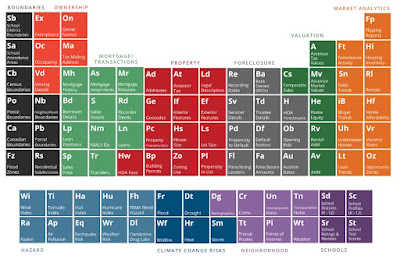
ATTOM data table of data

I asked chat GPT these questions and these were the answers it gave me below. I realize there is more detail to this response but politics and money play a huge role. Lying by omission is a huge problem in the real estate industry and the lack of disclosures is largely driven by the governing body National Association of Realtors

Annoying Paper Straws

annoying paper straw breaking apart
By Emily Cohn (Age 10)

Are paper straws better for our environment than plastic straws?   What do paper straws do in the world?

Biggest Failures of United States Regulatory Agencies

Regulatory agencies are not effective at their jobs, but we still need them.  How do we make regulatory agencies more transparent and hold them accountable for their actions? 

Seeking Journalists Interviews On The Global Media Fake News Landscape

fake news

We are looking for videographers to film exclusive interviews with world-famous journalists to talk about how they think of the global media landscape in this new era. 

Popular Articles (All Time)