A Great Depression By 2025? - The Man Who Called The 2008 Recession Sounds The Alarm | Peter Schiff

Showing posts with label Interest Rates. Show all posts
Showing posts with label Interest Rates. Show all posts
Why U.S. Cities Are Going Broke
Understanding the Financial Crisis: U.S. Cities, Debt, and Interest Rates
How 0% Interest Rates Has Caused The Next High Yield Bubble (Video)

The phenomenon of low or 0% interest rates potentially leading to a high yield bubble is an interesting topic that touches on various aspects of financial markets and economic behavior. Here’s a breakdown of how this can happen:
-
Lower Cost of Borrowing: When interest rates are near zero, borrowing costs are significantly reduced. This makes it cheaper for companies and investors to take on debt. As a result, businesses may issue more bonds to finance expansion or other projects, and investors may seek higher returns by investing in these bonds.
-
Search for Yield: With traditional savings accounts and government bonds offering very low returns, investors often look for higher yields in riskier assets. This search for yield can drive up prices in riskier bond markets, such as high-yield (junk) bonds, as investors are willing to accept lower credit quality for higher returns.
-
Increased Demand for High-Yield Bonds: The increase in demand for higher yields can lead to an inflow of capital into high-yield bonds. This demand pushes prices up and yields down, making high-yield bonds look even more attractive. However, this also means that these bonds may become overpriced relative to their risk.
-
Risk-Taking Behavior: With the cost of borrowing so low, there is often a tendency for both institutional and retail investors to take on more risk than they would otherwise. This can lead to the issuance of lower-quality bonds and an increase in speculative investments, as investors chase higher returns.
-
Market Distortions: Prolonged periods of low interest rates can distort market signals. Companies that may not have been able to issue bonds at higher rates might now issue debt at low rates, potentially leading to an oversupply of bonds with lower credit quality. This can mask underlying financial weaknesses and create an environment ripe for a bubble.
-
Potential for a Bubble Burst: When the economic conditions change or interest rates eventually rise, the prices of these high-yield bonds can drop sharply. Investors who bought these bonds at inflated prices may face significant losses, leading to a correction or crash in the high-yield bond market. This scenario can be exacerbated if many investors attempt to sell their bonds simultaneously, leading to a liquidity crisis.
-
Feedback Loops: The interplay between low interest rates, increased borrowing, and the search for yield can create feedback loops that amplify the bubble. As asset prices rise, confidence grows, leading to more borrowing and investment in high-yield assets, further inflating the bubble.
Understanding these dynamics is crucial for investors and policymakers to anticipate and mitigate the risks associated with a high-yield bubble. Proper risk management, diversification, and careful monitoring of market conditions are essential strategies to navigate such environments.
Why Don't Real Estate Brokers Disclose These 5 Safety Hazards?
Are We In A Recession? - I asked Chat GPT Some Related Questions
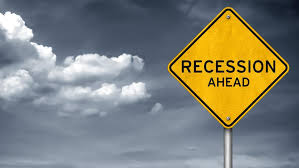
What is considered a recession?
A recession is generally defined as a significant decline in economic activity across multiple sectors of an economy, typically lasting for a sustained period of time. It is characterized by a contraction in the gross domestic product (GDP), which is the measure of the total value of goods and services produced within a country.
What Was the Brexit Vote? An Overview of the 2016 Referendum

In June 2016, the United Kingdom experienced a pivotal moment in its political history with the Brexit vote, a referendum that asked British citizens to decide whether the UK should remain in or leave the European Union (EU). This decision, with far-reaching implications, marked the beginning of a complex and often contentious process that reshaped the UK's relationship with the EU and the world.
The Context
The Brexit vote emerged from longstanding debates within the UK about the country’s role in the EU. Critics of EU membership argued that it compromised the UK's sovereignty, led to excessive regulations, and allowed unrestricted immigration from other EU countries. Supporters of remaining in the EU highlighted the economic benefits, including access to the single market and the advantages of political and economic collaboration with other European nations.
The Referendum
The referendum was called by then-Prime Minister David Cameron, who was under pressure from within his Conservative Party to address the EU membership issue. The campaign was marked by intense debate and sharp divisions, both within the UK and among its political leaders. The Leave and Remain campaigns each presented compelling arguments to the public, with Leave advocates focusing on issues like immigration control and national sovereignty, while Remain supporters emphasized economic stability and security.
The Outcome
On June 23, 2016, the British public voted on the question: “Should the United Kingdom remain a member of the European Union or leave the European Union?” The results were close, with 51.9% of voters choosing to leave the EU and 48.1% voting to remain. The Leave campaign secured 17.4 million votes, while the Remain campaign garnered 16.1 million votes.
Immediate Reactions
The result was a shock to many, leading to significant political and economic repercussions. Prime Minister David Cameron announced his resignation, citing the need for new leadership to guide the country through the exit process. The decision to leave the EU triggered debates over the future of the UK, including the fate of Northern Ireland, Scotland’s calls for another independence referendum, and the overall economic impact.
The Negotiation Process
Following the vote, the UK entered a period of intense negotiations with the EU to determine the terms of its departure. These talks covered a wide range of issues, including trade relations, citizen rights, and the financial settlement. The process was marked by numerous challenges, disagreements, and delays, leading to an eventual agreement on the terms of Brexit.
The Final Exit
The UK officially left the EU on January 31, 2020, entering an 11-month transition period to finalize arrangements for its future relationship with the EU. This transition period ended on December 31, 2020, marking the completion of the UK’s departure from the EU. The new relationship was defined by a trade agreement that sought to balance the UK’s desire for independence with the need for economic cooperation with the EU.
Conclusion
The Brexit vote of 2016 was a landmark moment in UK history, reflecting deep-seated divisions and sparking a new era of political and economic realignment. While the immediate aftermath was marked by uncertainty and upheaval, the UK’s departure from the EU has set the stage for ongoing discussions about the country’s role on the global stage and its future within a changing European landscape. As the UK continues to navigate the post-Brexit era, the implications of that historic vote will undoubtedly continue to shape its trajectory for years to come.
Has the Fed Lost Control of Interest Rates & the Bond Market?
Is the 10 Year about To Breakout of This Long Term Monthly Range into the 5-6% Range?
Is the 30 Year about to Breakout of this Long Term Monthly Range to 8%?
 TLT is the 30 Year Bond vs S&P 500

Historical Chart Fed Interest Rates vs SPX 1971 to 2013

This chart alone should tell you how much impact the Federal Reserve has on the overall economy. The Fed can obviously influence bankers but they have a little trickle-down effect on the overall economy. Housing market bubbles yes but business growth and jobs no.

Is the economy 27x stronger than it was in 1971? Or is this a Ponzi scheme spending and debt policy that have simply propped up markets artificially. Is the value created over the last 40 years at risk to collapse?


The labor participation rate is collapsing.
Should US Government Spending Crash Like the Stock Market?

- Should US Government spending crash like the stock market?
- Will industries that rely on Government spending be crushed?
- Has the Federal Reserve lost all credibility with the markets?
- The VC industry shrunk by 80% in the last decade so why not the Government?
- Rising interest rates might actually be good for the "real economy"?
- Are currency wars are going to get even more intense?
- Is the US the new emerging market carrying highest investment risk?
- Where & when will the next tech industry boom (ie jobs) come from?
- Is the Obama administration trying to kill capitalism vs government spending?
- When will kicking the Government debt can down the road STOP?
Who is More Influential on the Economy Steve Jobs or Ben Benanke?

1) History has shown that the economy only grows when there is an ecosystem of technology that creates jobs & Apple has fueled the growth of tech which has created millions of jobs Worldwide.
2) Ben's 0% interest rates have had no effect on whether millions of consumers Worldwide have made emotional Apple purchasing decisions. Two thirds of the US economy is based on consumption and Apple is driving it.
3) Ben Bernanke is an academic that relies on historical data to make reactive decisions when economic history rarely repeats itself.
4) Steve Jobs relies on his vision to shape the future of the technology industry and millions of people are affected based on these decisions.
5) The stock market always needs a leading growth stock story like AAPL in order for investors to get excited and put money to work in the market. The Nasdaq 100 index QQQQ is 20% based on Apple and thus 99 other stocks are directly affected by how AAPL trades.
6) 0% interest rates over the last few years have done nothing but create a bond market and real estate bubble which does nothing for capitalism and growth.
7) Steve Jobs has created wealth for millions of entrepreneurs who have started companies to feed off the Apple ecosystem.
8) Ben Bernanke has put billions of dollars in the hands of bankers and bond fund managers to prop up the stock market and create a false sense.
9) Foreign countries who invest in US Treasury Bills, like China, are not happy that the US is intensionally keeping interest rates low thus devaluing the dollar. The Dollar cannot be devalued forever in order to finance the future and thus a long term bubble is forming if it were to rise suddenly.
10) Apple's stock (AAPL) has the largest market cap in the World at $319 Billion and if it were to lose value quickly it would take down a lot of hedge funds, pension funds who have jumped on the bandwagon of wealth creation and could be destruction if we are not careful.
Get well Steve! We need you and Google to keep all entrepreneurs and investors excited about the future. Technology NOT energy should be the basis of the World economy in order to leave a better place for our kids.
Ben Bernanke has Purchased Double D's

The new $600B of quantitative easing goes into the banking and corporate sector of the economy who is largely sitting on the largest cash balance in business history. They don't need the money at all and it's not the sector of the economy who is going to take our unemployment rate down from 10-15%. Those who need the stimulus money the most, small business & private investors, can't get it. Seeing a company like General Motors go public again makes me want to puke. I can think of 100 other companies who deserve to be public companies before GM and that creates far more future value, jobs and innovation in our economy. GM going public is simply private equity, government money, and investment banker Ponzi scheme.
I was an apart of one of the largest business boom cycles in the late 1990s and there were a lot o great things about that time the US Government, FDIC, and Fed have forgotten. Investors were pouring money into Venture Capital funds that were providing funding to companies who were providing real long term jobs and creating new markets of innovation. Much of this money came from the Government in the form of FDIC subsidies and they made lots of money for taking this risk. Once the bubble burst and hedge funds drove the market 80% lower there was no optimism or money left in the VC industry to spark new growth. The VC industry has shrunk drastically in the last decade and almost 80% of the VC funds not based in Silicon Valley are virtually out of business (aka "the living dead funds").
Capitalism in general is kind of a Ponzi scheme but it can be done organically if the IPO market is fair and open. Capitalism also works when Government regulatory agencies stay out of our way and don't favor big business monopolies. I think if $100B in stimulus for struggling VC funds this would create another boom of optimism that we need. The Fed and FDIC should also consider an Emergency Fund to fund to solve the overweight population epidemic that is slowing the US economy down. Here are a few other ways President Obama could help create jobs.
How About Some QE for Venture Capital?

"Quantitative Easing" from the Federal Reserve just sounds like another theoretical way to pump up the markets and the economy when they can't drop interest rates any further than 0%. $2 Trillion dollars of Qualitative Easing has already gone into the banking system and what has it done for you and me? What is another $600B going to do? Absolutely nothing.
It really makes me sick to hear that $600 billion dollars is going to be pumped into the banking system when these are the same "bone heads" along with the Hedge Funds that got us into the mess. What is the last time you heard a story about a Bank giving money to a company that really needs it? All bankers do is lend money to companies who don't need it because they are risk averse. All these morons do take your money and the Feds at 0% and "try" and lend it at 5-15%.
Venture Capital and small business is what drives the US economy and this sector of the economy is still being overlooked. Organic growth is the ONLY thing that will get the US out of this recession and create jobs. Why not give $100B dollars to some VC Fund Managers or Private Equity Groups at no cost and require them to invest it in the next 12 months? I guarantee you they will get a return on this investment. The Venture Capital industry has shrunk drastically in the last decade and I think this is the sole reason why we are still in a recession and will be until politicians recognize this. VC fund managers cannot raise money from LP (Limited Partners) because the returns have been horrible as a result of the IPO market being virtually closed. Sometimes I think the Federal reserve spends too much time listening to politicians and not enough time in Silicon Valley, Boston, New York, Chicago and Los Angeles where new ideas are created and organic growth is created.
Popular Articles (All Time)
-
 Across the world, citizens are taking mapping into their own hands. With smartphones, GPS , and open-source tools , people are documentin...
 -
In the evolving landscape of digital media, publishers are constantly seeking innovative ways to monetize their content. One such tool that...
-
 By Emily Cohn (Age 10) Are paper straws better for our environment than plastic straws? What do paper straws do in the world?
 -
Credit card fraud has been a persistent issue for decades, affecting millions of people worldwide. Despite significant advancements in tech...
-
Geographic Information System (GIS) visualization techniques are essential for analyzing and presenting spatial data in meaningful ways. Her...
-
A Great Depression By 2025? - The Man Who Called The 2008 Recession Sounds The Alarm | Peter Schiff
-
Steve Blank shares an insider's perspective on how data and analytics are disrupting the art of venture capital investing . Is the era...
-
As we progress through 2024, the global financial landscape presents numerous opportunities for savvy investors, particularly in the realm...


