

Google Maps Ads for Map Publishers?
Less Than .01% of Mobile Apps Are Used on A Consistent Basis

RIP 99% of Mobile Apps
Great Quote from VP of Global Marketing at Facebook Carolyn Everson.
"80% of the time users spend time on top 4 apps. .00087% of apps are actually used on a consistent basis." This quote was from the Keynote address at CES 2016.
This is why we don't develop apps. Apps are too expensive and no ROI.
In today’s digital era, mobile applications have become indispensable tools for communication, entertainment, work, and everything in between. The app marketplace is teeming with millions of options, each vying for a share of our increasingly limited attention spans. However, a startling revelation has emerged: less than 0.01% of mobile apps are used on a consistent basis.
This figure underscores a profound truth about user behavior and app utility. While the average smartphone user might have dozens of apps installed, only a tiny fraction of these are used regularly. The reasons for this disparity are manifold, involving aspects of user experience, app design, and market saturation.
The Overabundance of Choice
The sheer volume of apps available in app stores today can be overwhelming. Users are inundated with choices, leading to a paradox of choice where the abundance of options makes it harder for any single app to stand out. Consequently, even well-designed apps may struggle to maintain consistent usage as users flit from one novelty to another.
User Engagement and Retention Challenges
User engagement is a critical metric for app developers. A well-designed app that meets a clear need can still struggle with user retention. Factors such as app usability, relevance, and the user’s immediate needs play pivotal roles. Apps that fail to offer continuous value or that do not evolve with user preferences often see a steep drop in usage over time.
Moreover, the nature of the app itself can influence its retention rate. Utility apps, such as those for banking or productivity, might see higher engagement compared to entertainment apps, which users might use sporadically. This variability highlights the challenge of creating an app that not only attracts users but also keeps them coming back.
The Role of User Experience
A seamless and intuitive user experience is crucial for fostering consistent app usage. Apps that are cumbersome, slow, or difficult to navigate quickly drive users away. In contrast, apps that offer a smooth, engaging, and personalized experience are more likely to retain users over the long term. This underscores the importance of continual updates and user feedback integration in app development.
The Impact of App Fatigue
App fatigue is a significant factor in the low usage rates of most mobile applications. As users accumulate more apps, their attention becomes more fragmented, and the novelty of new apps diminishes more rapidly. This phenomenon often leads users to stick with a few core apps that they find indispensable, relegating others to the background.
Strategies for Enhancing Consistent Use
For developers aiming to increase the likelihood of their app being one of the few consistently used, several strategies can be employed. First, focusing on solving a specific problem or fulfilling a clear need can help differentiate an app from the multitude of alternatives. Second, investing in a superior user experience with intuitive design and regular updates can enhance user satisfaction and retention. Lastly, understanding and adapting to user behavior through data analytics and feedback loops is essential for maintaining relevance and engagement.
In conclusion, while the app marketplace is vast, the challenge of maintaining consistent user engagement is formidable. Less than 0.01% of mobile apps achieving this feat is a testament to the difficulties inherent in the industry. For app developers, the journey toward creating a consistently used app is fraught with challenges, but with a clear focus on user needs, experience, and engagement strategies, it is a goal within reach.
How Crony Capitalism Corrupts the Free Markets

In a true free market, competition thrives on the principles of merit and fairness, allowing the best products and services to rise to the top. However, when crony capitalism takes root, these principles are undermined, leading to a distortion of market dynamics and a significant erosion of economic efficiency and equity.
Defining Crony Capitalism
Crony capitalism refers to an economic system in which business success is heavily influenced by close relationships between business leaders and government officials. Rather than competing on the basis of quality, innovation, and efficiency, businesses gain advantages through preferential treatment, subsidies, regulatory favors, and other forms of government intervention that disadvantage their competitors. This practice undermines the foundation of a free market, where success is determined by market forces and consumer choice.
The Erosion of Fair Competition
One of the most profound impacts of crony capitalism is the erosion of fair competition. In a free market, companies must innovate and improve their offerings to attract customers and sustain growth. However, crony capitalism allows certain businesses to bypass this crucial aspect of market dynamics. By securing favorable regulations, tax breaks, and government contracts, crony firms can undercut their competitors or maintain market dominance without having to compete on equal footing.
This distortion not only stifles innovation but also discourages new entrants from entering the market. New businesses, lacking the same connections and influence, find it challenging to compete with established firms that enjoy government favoritism. As a result, the market becomes less dynamic and less responsive to consumer needs, ultimately leading to stagnation and reduced economic growth.
Resource Misallocation
Crony capitalism often leads to inefficient allocation of resources. When businesses receive government support or protection, they may invest in projects or products that are not necessarily aligned with consumer demand or societal needs. This misallocation can lead to overproduction in certain sectors while others suffer from a lack of investment and development. For example, subsidies for fossil fuel industries can crowd out investment in renewable energy technologies, even as the demand for sustainable solutions grows.
The impact of crony capitalism is not limited to economic inefficiency; it also exacerbates income inequality and social unrest. When a small group of businesses and their allies control significant economic resources through their political connections, the wealth gap widens. The general public, who are often excluded from these networks, may see little benefit from economic growth and may even experience a decline in their standard of living.
This growing disparity can lead to disillusionment and dissatisfaction with the economic system, fueling social and political instability. The perception that the game is rigged against ordinary people can erode trust in institutions and democratic processes, further destabilizing the economy and society.
Addressing the Challenge
Addressing the challenges posed by crony capitalism requires a multifaceted approach. Strengthening regulations to prevent conflicts of interest, promoting transparency in government contracts, and ensuring that competition laws are robust and effectively enforced are crucial steps. Additionally, fostering an inclusive economic environment that supports entrepreneurship and innovation can help counterbalance the advantages enjoyed by crony firms.
Ultimately, restoring the integrity of free markets in the face of crony capitalism is essential for promoting sustainable economic growth, enhancing social equity, and ensuring that the benefits of prosperity are widely shared. By reasserting the principles of fairness and competition, societies can build markets that truly serve the interests of all, not just the privileged few.
Be Fearful When Others Are Greedy

The Put Call Ratio vs the S&P 500 Is Unhealthy Once Again
Everyone Buying Calls & No One Is Buying Puts
Healthy Markets Correct To Clean Out The Crap & Pretenders
This Market is Phony Just Like The Fed Who Does Not See A Bubble
This is Not a Map But An Important Chart to Understand


Why The Fed's 0% Interest Rate Policy Hurts The Economy & Savers

What Is The Best Bitcoin Wallet or Exchange Service?

Where is the Best Places to Buy & Trade Bit Coins?
What Wallets and Exchanges Are Certified?
How Are Merchant and Bitcoin Owners Vetted?
Bitcoin is the World's first decentralized digital monetary system and "bitcoins" are the currency units used. A decentralized system is essentially a P2P or pier to pier system versus a centrally managed system like PayPal. The system has existed since January 3rd, 2009 and is used in every Country in the World. Bitcoins are created and controlled by advanced mathematics and cryptography, instead of by governments or banks (no government, bank, or corporation owns or controls Bitcoin). Bitcoins as a currency unit are created over time at a diminishing rate, and there will never be more than 21 million of them in existence (though they are highly divisible).
Bitcoin is different from any other payment system because:
- It is decentralized (no group has monopoly control over it)
- It is not tied to US dollars or other government fiat currencies
- It is impossible to suffer chargebacks or frozen accounts
- It is (relatively) anonymous
- Fees are optional (you may pay to make your transactions process slightly faster)
- Merchants can accept payments easily with hardly any fees.
US Governments officials and regulators will obviously be interested in stopping / regulating this for the following reasons:
- Cutting Off Terrorism Funding
- Leakage of Tax Revenue
- Money Laundering
- Tax Evasion
- Exchange of Illegal Goods and Services
Federal Reserve Whistleblower Says "Insiders Know Quantitative Easing Doesn't Work"
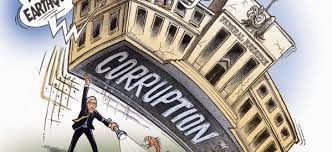
In a startling revelation that has sent ripples through the financial community, a whistleblower from the Federal Reserve has come forward with allegations that senior officials within the institution are well aware that Quantitative Easing (QE) does not effectively stimulate economic growth as intended. The whistleblower, who has chosen to remain anonymous for fear of retaliation, claims that the longstanding policy of purchasing long-term securities to inject liquidity into the financial system has been largely ineffective in achieving its goals.
Quantitative Easing, introduced by the Federal Reserve in response to the 2008 financial crisis, was designed to lower interest rates and increase the money supply to stimulate economic activity. By buying vast quantities of government and mortgage-backed securities, the Fed aimed to drive down long-term interest rates, thereby encouraging borrowing and investing. The policy was expanded and maintained through several rounds of QE, especially following the economic downturn and during the COVID-19 pandemic, as the Fed sought to support the economy in the face of unprecedented challenges.
However, according to the whistleblower, the intended effects of QE have been largely superficial and, in some cases, counterproductive. The source claims that insiders have long known that the policy has failed to generate the expected inflationary pressures or significantly boost economic growth. Instead, it has primarily served to inflate asset prices, contributing to growing wealth inequality and distorting financial markets.
The whistleblower pointed to several key issues with QE. One major concern is that the policy has primarily benefited large financial institutions and wealthy individuals, who have seen their asset holdings appreciate substantially. Meanwhile, middle- and lower-income households have not experienced the same benefits, leading to a widening wealth gap. Critics argue that QE has contributed to asset bubbles in markets such as real estate and stocks, potentially setting the stage for future financial instability.
Furthermore, the whistleblower suggested that the Federal Reserve’s focus on monetary policy has overshadowed the need for more comprehensive fiscal measures to address economic challenges. The lack of coordinated fiscal policy, the whistleblower argues, has left the economy vulnerable to shocks and has hindered efforts to achieve sustainable, broad-based growth.
The revelations have sparked a heated debate among economists, policymakers, and the public. Some experts argue that the whistleblower's claims highlight the need for a reevaluation of the Federal Reserve’s approach to economic policy, advocating for more targeted interventions that address the root causes of economic inequality and promote inclusive growth. Others defend the Fed’s actions, contending that QE was a necessary and effective tool given the extraordinary circumstances of the past decade.
As the debate continues, the question remains whether the Federal Reserve will take the whistleblower’s concerns into account and consider a shift in its policy framework. For now, the spotlight is on the Fed and its leadership to clarify their stance on the efficacy of Quantitative Easing and to address the growing calls for a more balanced and equitable approach to economic policy.
Has the Fed Lost Control of Interest Rates & the Bond Market?
Is the 10 Year about To Breakout of This Long Term Monthly Range into the 5-6% Range?
Is the 30 Year about to Breakout of this Long Term Monthly Range to 8%?
 TLT is the 30 Year Bond vs S&P 500

Historical Chart Fed Interest Rates vs SPX 1971 to 2013

This chart alone should tell you how much impact the Federal Reserve has on the overall economy. The Fed can obviously influence bankers but they have a little trickle-down effect on the overall economy. Housing market bubbles yes but business growth and jobs no.

Is the economy 27x stronger than it was in 1971? Or is this a Ponzi scheme spending and debt policy that have simply propped up markets artificially. Is the value created over the last 40 years at risk to collapse?


The labor participation rate is collapsing.
Popular Articles (All Time)
-
In the evolving landscape of digital media, publishers are constantly seeking innovative ways to monetize their content. One such tool that...
-
 By Emily Cohn (Age 10) Are paper straws better for our environment than plastic straws? What do paper straws do in the world?
 -
Credit card fraud has been a persistent issue for decades, affecting millions of people worldwide. Despite significant advancements in tech...
-
Geographic Information System (GIS) visualization techniques are essential for analyzing and presenting spatial data in meaningful ways. Her...
-
A Great Depression By 2025? - The Man Who Called The 2008 Recession Sounds The Alarm | Peter Schiff
-
Steve Blank shares an insider's perspective on how data and analytics are disrupting the art of venture capital investing . Is the era...
-
As we progress through 2024, the global financial landscape presents numerous opportunities for savvy investors, particularly in the realm...
-
When someone agrees to become a successor trustee , they often underestimate the commitment required. Acting as a trustee is not merely an ...


